Field Rotation - Phase I
One of our hay fields is due to be rotated this year. It has been producing alfalfa-grass mix hay since 1998. Thirteen years of production is fairly substantial, especially considering that it was seriously damaged in flood of ’96.
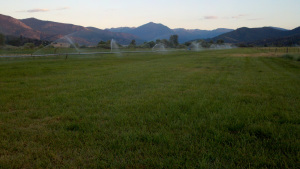
McBride 6 After 2nd Cutting
It finally reached a point this year where the production fell below five ton per acre and it is inundated with undesirables; weeds that we are unable to spray to eliminate without also killing the alfalfa, the fescue or the orchard grass.
Some of the weeds present were:
Lupine is poisonous from spring time until the fall, with the younger plants being more toxic than the mature.
Fiddleneck is poisonous to all livestock, but more so in horses, especially if consumed as part of hay. Most livestock will not graze if given choice, but as part of hay, likely hood of consumption is increased.
Canada Thistle is an aggressive perennial that is extremely difficult to control due to its extensive root system. Livestock avoid grazing in areas surrounding the thistle and will not eat hay that contains the thistle.
Goathead is a nasty form of puncture vine that is very successful in damaging tires on vehicles and equipment, causing sores on the feet of dogs and potentially in the mouths of livestock.
In addition, nearly 20% of the field is inundated with rodents, which have killed much of the desirable vegetation and also created a safety hazard for grazing with cattle and horses.
To begin the process of rotating the field, we turned our cattle out on the field to graze the regrowth that occurred following third cutting. We then made one pass with the wheelline to stimulate regrowth of all vegetation. Once the regrowth reached approximately 3″, we applied the herbicide Roundup to kill all vegetation that is susceptible to glyphosate. We then waited two weeks for the affected plants to die.
Stay tuned for Phase II.



Great post. How do you measure the amount of poisonous weeds that maybe present in the hay? If not able to measure, how much of poisonous can be present that don’t create a problem in the hay?
Thanks for a great question Robert. It depends on if the field is producing hay that I will feed our own cattle, horses and sheep or if it is to be sold. For our own use, I can tolerate between 5% and 10% encroachment. However, if it is a field that I sell the hay to dairies, horse owners, or export, I only allow undesirables around the outside edges, which I can easily put up and haul separately (less than 5%). Noxious weeds throughout the field will cause hay to be rejected by the buyer and/or significantly discounted.
Hay quality and the nutritional impacts of weeds is something I’ve been learning about recently.
I had no idea that plants could cause cancer in animals and all the problems that would happen from these plants. Thanks for the great information.
The weeds I am trying to eliminate from the field are ‘toxic’ to some animals, not ‘cancer’ causing. They contain chemicals that are poisonous or can cause cattle or horses to abort, run high fevers, cause respiratory damage, etc.