It’s More Than Corn: Pasture Talk
Having discussed feedstuffs and ration formulation it is now time to talk about pastures, an essential component in the cattle business.
By definition, a pasture is an area of land which there is growth of forage which livestock may graze at will. Good pastures have ample growth of lush, green, nutritious, actively growing forage from which livestock can eat all they can consume in a relatively short period of time. Pastures vary greatly, depending on type, growing conditions and stage of maturity.
Legumes and Nonlegumes
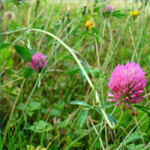
- Red Clover, Legume
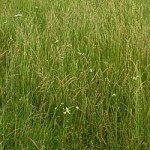
Fescue, Nonlegume
A legume is a plant which has the capacity to harbor nitrifying bacteria in its roots and is able to meet at least part, if not all, of its own nitrogen needs. A nonlegume is dependent upon outside sources of nitrogen.
Annuals and Perennials
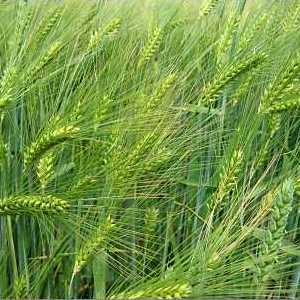
- Barley, Annual
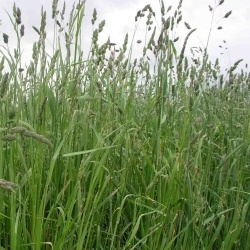
Orchard Grass, Perennial
An annual plant must be planted from seed each year. A perennial does not have to be annually reseeded. Regional conditions determine the life span of a perennial, particularly in its ability to maintain desired yields. Depending on the plant, perennials are rotated out, when the yield drops off, for a year and then replanted.
Summer and Winter
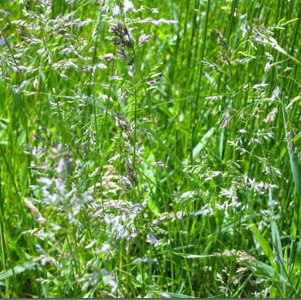
Bluegrass, Summer
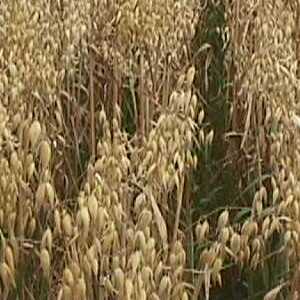
Oats, Winter
A summer pasture starts growing with the onset of warm weather in the spring and continues to grow until halted by fall frost. Winter pasture starts active growth in the fall, remains alive during the winter and makes rapid growth during the late winter and spring, with little if any growth during the summer.
Temporary and Permanent
Temporary pasture is one that is seeded on freshly cultivated soil for use through only one or a part of one grazing season. These pastures typically are an annual or a mix of annuals. A permanent pasture, once established, remains as pasture for a period of years. It may involve a mix of perennials or continual reseeding of annuals.
Mixture and Pure Seedings
A pasture mixture is a combination of two or more pasture crops in the same area. Typically the crops complement each other in growth characteristics and/or nutritive value. Pure seeding is a pasture which supposedly consists of only one species, although completely pure stands are seldom found.
Pasture Classification
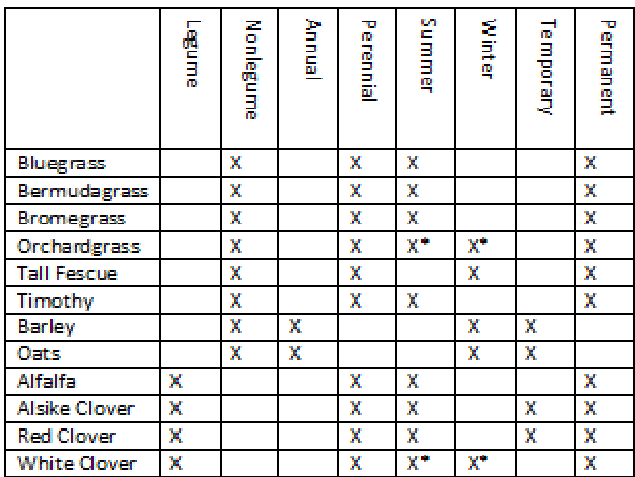
Pasture Classification Table
*Summer in the north, winter in the south
The table below is provided so comparisons can be made between some of the feeds and pastures mentioned in this and previous posts. Note the differences between some of the pastures and their corresponding hays.
Feed Compositions
| Dry Matter % | Crude Protein % | TDN % | DE mcal/lb | Ca % | P % | |
| Alfalfa Pasture | 21 | 4.3 | 13 | .268 | .41 | .06 |
| Alfalfa Hay | 90 | 15.3 | 52 | 1.04 | 1.27 | .22 |
| Barley Grain | 88 | 11.9 | 74 | 1.48 | .04 | .34 |
| Bermuda Pasture | 29 | 4.4 | 19 | .372 | .14 | .08 |
| Bermuda Hay | 91 | 8.9 | 42 | .839 | .43 | .16 |
| Bluegrass Pasture | 35 | 5.2 | 23 | 1.20 | .29 | .24 |
| Bluegrass Hay | 89 | 11.6 | 54 | 1.08 | .29 | .22 |
| Corn | 89 | 9.6 | 77 | 1.52 | .03 | .26 |
| Corn Silage | 30 | 2.5 | 21 | .413 | .09 | .08 |
| Cottonseed Meal | 92 | 38.6 | 67 | 1.347 | .18 | .96 |
| Fescue Pasture | 29 | 4.2 | 19 | .386 | .15 | .11 |
| Fescue Hay | 90 | 8.3 | 50 | 1.00 | .46 | .32 |
| Grain Sorghum | 90 | 11.1 | 78 | 1.54 | .03 | .29 |
| Oats Grain | 89 | 11.8 | 68 | 1.37 | .07 | .33 |
| Oat Hay | 91 | 8.5 | 56 | 1.11 | .22 | .20 |
| Orchardgrass Pasture | 23 | 4.3 | 17 | .336 | .13 | .13 |
| Orchardgrass Hay | 91 | 7.6 | 49 | .98 | .35 | .32 |
| Peanut Meal | 92 | 48 | 71 | 1.41 | .27 | .62 |
| Soybean Meal | 89 | 44.6 | 75 | 1.50 | .30 | .62 |
| Timothy Hay | 89 | 7.2 | 52 | 1.03 | .38 | .18 |
| Wheat Grain | 89 | 14.2 | 78 | 1.56 | .04 | .37 |
Leave a Reply
Honors


Serious follower of this blog, a variety of your articles have seriously helped me out. Looking forward to posts!
Excellent reminder of the feed values! Thanks!