Search Results
It’s More Than Corn: Grass v Grain, Some Simple Facts
I have now written seven posts pertaining to feeds and the feeding of cattle, with the hope to explain with clarity two things: corn is not the only feed fed to cattle and grass finishing cattle is less efficient than grain finishing.
Do not take this the wrong way, please. I have nothing against grass finished cattle. In fact, I fully support the marketing of the product as a wonderful opportunity to offer consumers more choices. In fact, I raise some grass-fed to meet that specific market.
What I do take exception to is when some individuals make claims that are untrue and misleading.
Claim: Grass finished cattle take the same amount of time to reach their end point.
Grass is wonderful for growing cattle, but due to the low digestible energy (DE), when compared to grain, is not an efficient means to finish cattle. Grain finished cattle reach an endpoint around 13 – 15 months of age, while grass finished cattle reach an endpoint around 19 – 23 months. An animals breed, genetics and frame size also play a role in determining how quickly an animal will reach their endpoint. However, the biggest factor is the animals diet; high energy yields quicker gains and lower energy yields slower gains.
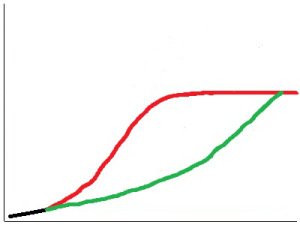
Grass vs Grain Sigmoid Growth Curve
It’s More Than Corn: Pasture Talk
Having discussed feedstuffs and ration formulation it is now time to talk about pastures, an essential component in the cattle business.
By definition, a pasture is an area of land which there is growth of forage which livestock may graze at will. Good pastures have ample growth of lush, green, nutritious, actively growing forage from which livestock can eat all they can consume in a relatively short period of time. Pastures vary greatly, depending on type, growing conditions and stage of maturity.
Legumes and Nonlegumes
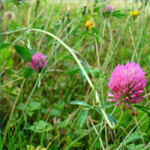
- Red Clover, Legume
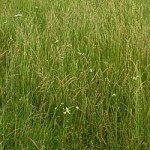
Fescue, Nonlegume
A legume is a plant which has the capacity to harbor nitrifying bacteria in its roots and is able to meet at least part, if not all, of its own nitrogen needs. A nonlegume is dependent upon outside sources of nitrogen. Read more…
It’s More Than Corn: Feeds
Part 5
Over the years, there have been hundreds of different products utilized as feed for livestock. Alternative feed supplies vary by region. I am only going to address some of the more “important” feeds, as based on annual usage within the United States.
Energy Feeds
Corn is the most widely used energy feed and excels in pounds of TDN produced per acre. It is very low in calcium, fair in phosphorus, deficient in vitamin B12 and must be supplemented with protein for most classes of livestock.
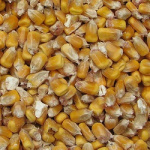
Corn
Sorghum is grown in semi-arid regions where corn does not grow well. It is similar to corn in its nutrient load, but is slightly higher in protein. It can be used to replace corn in rations, however, feed efficiency and gains may be decreased by as much as 10 percent. To overcome this loss, rolling or feeding as a high moisture grain is recommended. Read more…
It’s More Than Corn: Importance of Physiological Phases
Part 4
This section of the series, when coupled with the previous posts, begins to layout some of the benefits to having the ability to utilize grain in the diets of livestock, particularly as an animal’s need for energy and protein increase through various stages of physiological maturity.
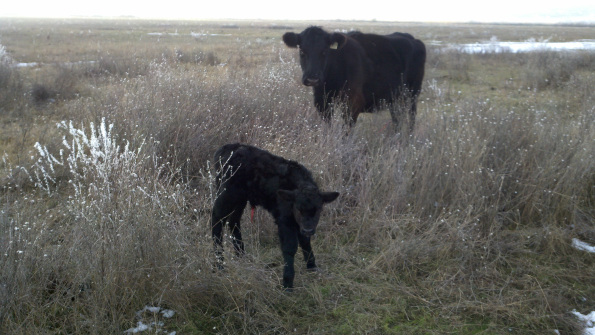
How do physiological phases affect rations?
When evaluating the science of livestock production, we divide growth into several different physiological phases. All animals, including humans, are involved with at least one of the phases at all times, maintenance, but are rarely involved in more than two or three at any given time. Each phase has its own unique nutritional requirements and thus, rations are changed according to the phase and the animal’s requirements.
Maintenance Phase
Maintenance is the maintaining of an animal’s health and well-being. A maintenance ration meets an animal’s need who is not growing, not pregnant, not storing fat and not yielding a product (milk, wool, etc.). Basic maintenance requirements include energy for vital organs to function properly, maintaining body temperature, protein for body tissue repair; replace mineral loss, vitamins for maintenance and certain fatty acids.
Growth Phase
Growth is primarily an increase in muscle, bone, organs and connective tissue. It is essential during the growth phase that nutrient needs are met to insure that the animal can attain its proper mature status and size. During this phase there is an increased need for high quality protein, higher energy and a greater demand for adequate levels of minerals and vitamins. Daily growth rate increases until puberty and then decreases through maturity. Read more…
It’s More Than Corn: Minerals and Vitamins
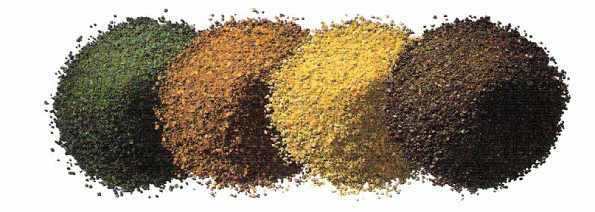
Minerals Samples
Part 3
Why are minerals important?
Minerals are used for a multitude of different functions in the body. While they are required in vastly different quantities, the amounts required has nothing to do with the essentiality of function performed. Quantities required range from as much as ~1.0% calcium to as little as .10ppm of selenium, depending on age and use. Read more…