Archive

Archive for the ‘Farm & Ranch Life’ Category

Earth Day, Every Day, On The Ranch
Every day is Earth Day on our ranch, that is part of the reason we do what we do. We take a holistic approach to management.

Riparian Zone
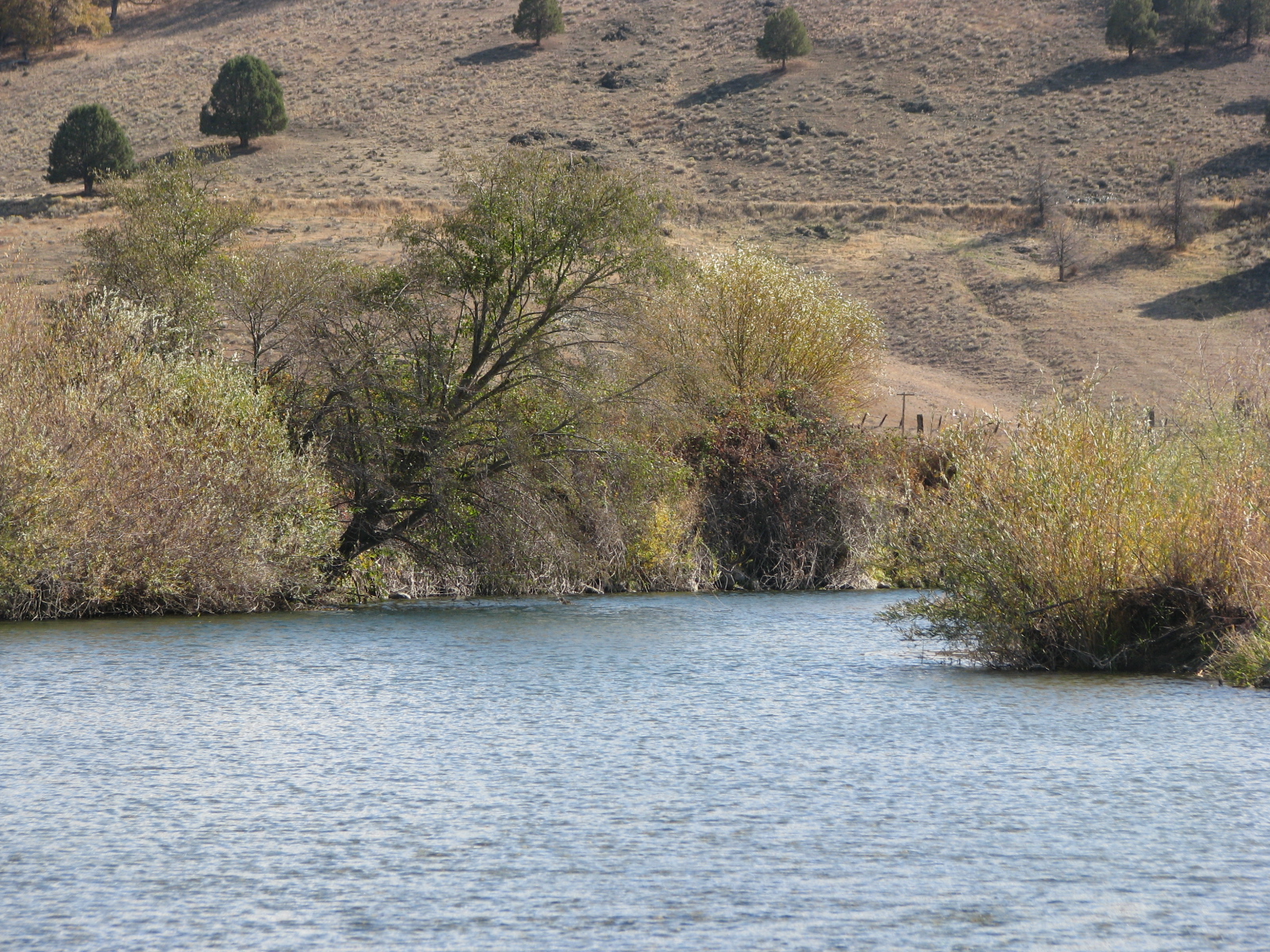

The Scott River flows through the middle of our ranch. Over the past several decades we have stabilized and fenced two miles of river and planted over 10 acres in mixed riparian vegetation. We then manage grazing to maintain the health of the zone and manage the weeds. The river has high quality salmon habitat and is frequented by bear, beaver, deer, ducks, elk and geese.
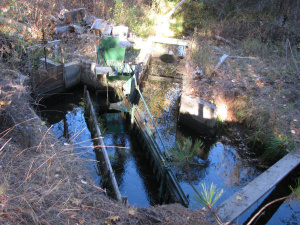
Fish Screen

Also, we have installed fish screens at each of the four diversions we operate to prevent fish from entering the irrigation ditches. At each of the diversions we have also installed fish friendly rock weirs so that we no longer have to utilize push up dams.

Soil
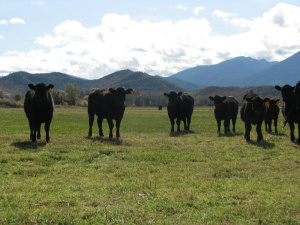

When it comes to managing the soil, we test regularly to insure that the soil remains healthy and productive. Fields and pastures only receive soil amendments when they start showing depletion. As nutrients are needed, we utilize a variety of replenishments including manure from our cattle, horses and sheep, as well as naturally occurring commercial additives. Most of our pastures maintain productivity solely on the natural deposition of manure from our livestock as we rotate from field to field during the summer and harrow after the critters leave a field to evenly distribute the manure so that it can be incorporated into the soil.

Water
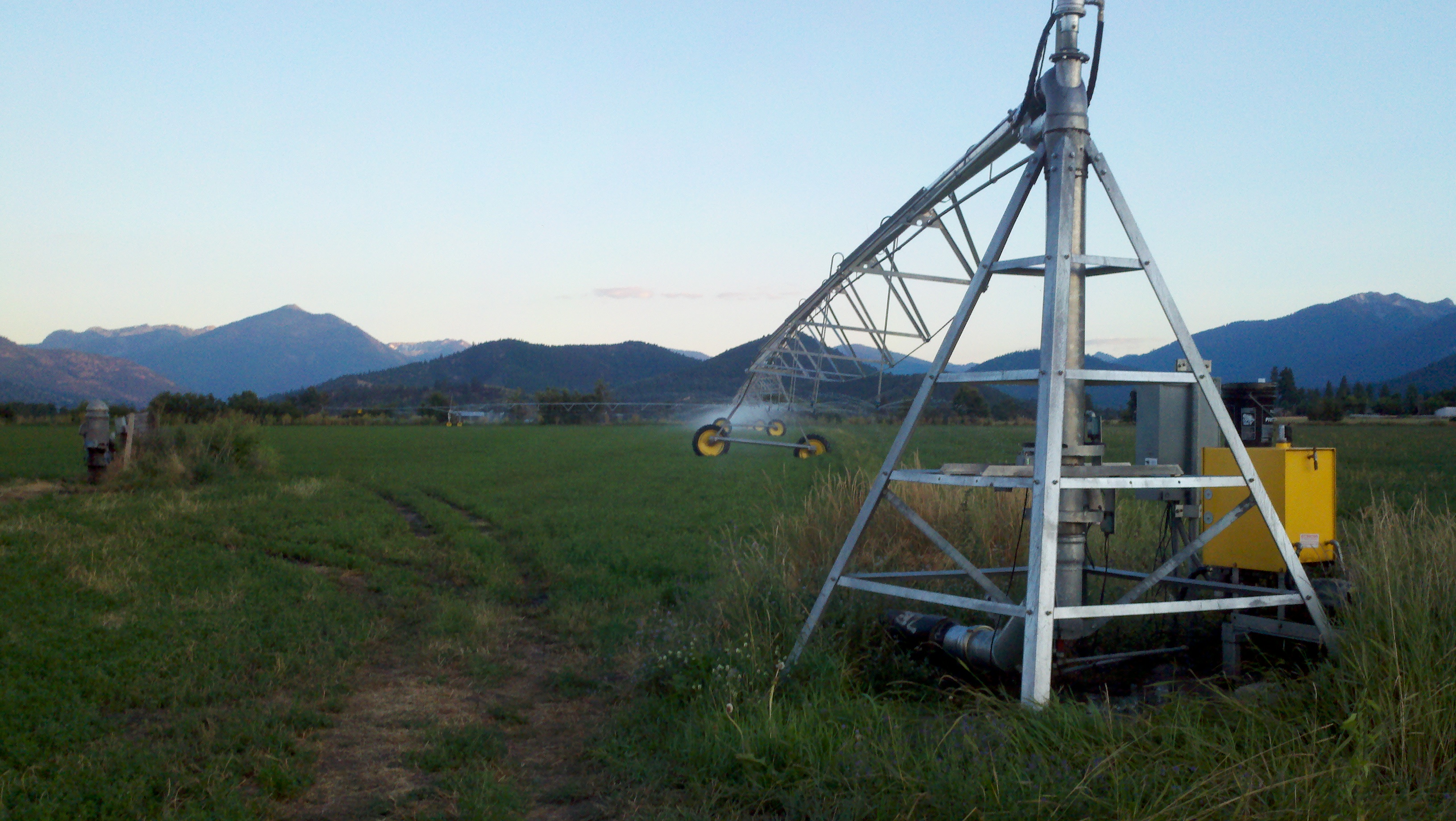

We utilize a variety of methods for irrigation. Early in the season, we predominately flood irrigate, which insures the aquifer is charged for summer pumping. We continue to flood irrigate throughout the summer in specific fields that allow surface water to quickly percolate and help maintain a balance with pumping so that water does not have to be lifted as far with the pumps. Additionally, flood irrigation applies water that will slowly flow subsurface to the river, returning cooler to the river than the existing surface water, creating quality habitat for salmonid fingerlings. We have also installed a central pivot irrigation system on our hay fields to be more efficient and utilize wheellines on pastures that are higher in clay. In the winter, we continue to flood irrigate part of one field to provide additional habitat for the Canada Geese that migrate through each year. It is not uncommon to see 10′s of thousands of geese during the winter months.

Photos, Private Property and Politics

There has been a fair amount of discussion recently over legislation being submitted across the country that would make it illegal for someone to photograph or shoot video on agricultural operations without the permission of the owner. Discussions on this type of legislation has been very polar, with folks either in full support or adamantly opposed. I find myself aligning more in the middle.

First, Senator Jim Norman (R) of Florida proposed the legislation, SB 1246, on Feb. 21, 2011.

“An act relating to farms; prohibiting a person from entering onto a farm or photographing or video recording a farm without the owner’s written consent; providing a definition; providing penalties; providing an effective date.”

Also considering similar legislation is the state of Iowa which introduced, on March 2, 2011, House File 589.

“HF 589 addresses concerns of bio-security of Iowa’s animal industry and the well-being of animals. The bill protects livestock and crop operations against unauthorized destruction, killing or injuring of stock, or disruption of agricultural or bio-technical operations on an owner’s premise. Additionally, it makes it unlawful to produce, possess, or distribute an unauthorized recording (sound or image) at an animal or crop operation.” Read more…

If you….#agnerd

First, some of you may be wondering; what is this #agnerd hashtag and where did it come from?

Definition

Agnerd (ag-nurd) noun. Slang. 1. A person pursuing knowledge in technology, science and/or obscure facts who also has an interest in or actively participates in the agriculture community. 2. A mythical creature thought to only exist on social media networks. 3. A being that may be considered “unusual” by other people.

The term was first described by Chris Raines (@itweetmeat) and was brought to the mainstream by Kathy Swift (@cowartandmore). For more history, visit this post at agchat.org.

Since its inception, there have been many tweets and posts depicting an #agnerd in action. Here are a few that I came up with.

If you find yourself thinking about SEO while horseback or on a tractor, you might be a #agnerd Read more…

Size Is Relative

Big is bad, small is good, organic is healthy, conventional kills you, grass-fed is better for you, grain-fed is wasteful, families are good, and corporations are evil…..

The pontificating purveyors of perpetual rhetoric have been rather vocal lately. Once again, discussion is swarming around the issue of the size of farms and ranches; the proverbial “good vs. evil.” To most farmers and ranchers, who rely on the productivity of their farm, ranch or forest to maintain a living, it is clear; size is relative.

For decades, individuals and groups have attempted, sometimes successfully, to fracture agriculture; to divide and conquer. Recently, in the past few years, agriculture has begun to come together, setting their differences aside and working together as one, for the benefit of all. This unity and healing of old scars has positioned many, who have relished in conflict, to encounter unknown waters and uncertainty.

Size

In California alone, there are regions where a family can make a living on 1 to 5 acres. In other regions, it requires several hundred and for others more than a thousand acres for a family to survive. Climate, growing days, soil fertility and water availability are a few factors that heavily impact productivity of a farm or ranch. For example, my cousin-in-law has a 4.5 acre flower farm near San Diego, does very well for his family of four and is considered “big.” On the other hand, a good friend of mine, who lives in North Eastern California, is surviving running cattle on more than two thousand acres and is considered “small” compared to his neighbors. When it comes to size, relative productivity is what matters. Irrigated pasture might be able to carry three to five head per acre, while desert range might require 100 acres to carry just one pair. A twenty acre farm in the Salinas Valley might be able to grow three different crops in a year and be financially viable, while a shortened growing season in the Scott Valley, limited to one crop per year, will require three to four hundred acres of grain or hay to be viable.

Practice

Throughout the day, I could not help but picture the agricultural industry as a circus, each size and type of operation an act. Every act has its moment in the spotlight, just as trends, fads and niches do in real life. That does not make one act or operation good or bad. It is the collection of the diverse acts that makes a show successful. A one-act circus would be hard pressed to sustain business. It is the diversity of agriculture that provides choices to the public. It is the diversity of agriculture that provides choices to producers. Each act or operation offers something unique that meets the needs of a different segment of society. Diversity and variety are what helps keep the marketplace healthy and aids in growing the economy.

Productivity

Furthermore, it is high time to move beyond the belief that all farms and ranches are solely focused on maximizing production. Times have changed. Modern agriculture is about optimizing production. It is about finding balance with yield, profit, input costs, the welfare of livestock, keeping the soil healthy, enhancing wildlife habitat and conserving resources. The mentality of “get big or get out” is from the past. We must move beyond the idea of preservation and embrace conservation.

The continued labeling of practices and the portrayal of one practice as better than another only serves to perpetuate animosity. Prejudice must end. Minds must open. Listening for understanding must occur. It is time to recognize the importance that all aspects of agriculture play. Small or large, organic or traditional, the ability for families to make a living, while conserving and managing the resources is essential.

REDNECK FARM KID…in the Marine Corps

This letter was sent my way a day or two ago from a friend and I enjoyed so much that I had to share it.

Dear Ma and Pa,

I am well. Hope you are. Tell Brother Walt and Brother Elmer the Marine Corps beats working for old man Minch by a mile. Tell them to join up quick before all of the places are filled.

I was restless at first because you get to stay in bed till nearly 6 a.m. But I am getting so I like to sleep late. Tell Walt and Elmer all you do before breakfast is smooth your cot, and shine some things. No hogs to slop, feed to pitch, mash to mix, wood to split, fire to lay.
Practically nothing.

Men got to shave but it is not so bad, there’s warm water. Breakfast is strong on trimmings like fruit juice, cereal, eggs, bacon, etc., but kind of weak on chops, potatoes, ham, steak, fried eggplant, pie and other regular food, but tell Walt and Elmer you can always sit by the two city boys that live on coffee. Their food, plus yours, holds you until noon when you get fed again. It’s no wonder these city boys can’t walk much.

We go on ‘route marches,’ which the platoon sergeant says are long walks to harden us. If he thinks so, it’s not my place to tell him different. A ‘route march’ is about as far as to our mailbox at home. Then the city guys get sore feet and we all ride back in trucks.

The sergeant is like a school teacher. He nags a lot. The Captain is like the school board. Majors and colonels just ride around and frown. They don’t bother you none.

This next will kill Walt and Elmer with laughing. I keep getting medals for shooting. I don’t know why.. The bulls-eye is near as big as a chipmunk head and don’t move, and it ain’t shooting at you like the Higgett boys at home. Al l you got to do is lie there all comfortable and hit it. You don’t even load your own cartridges They come in boxes.

Then we have what they call hand-to-hand combat training. You get to wrestle with them city boys. I have to be real careful though, they break real easy. It ain’t like fighting with that ole bull at home. I’m about the best they got in this except for that Tug Jordan from over in Silver Lake .. I only beat him once… He joined up the same time as me, but I’m only 5’6′ and 130 pounds and he’s 6’8′ and near 300 pounds dry.

Be sure to tell Walt and Elmer to hurry and join before other fellers get onto this setup and come stampeding in.

Your loving daughter ,

Alice